
ADA Signage Built to the 2010 Standards
The 2010 ADA Standards for Accessible Design set detailed, enforceable rules for signs in public accommodations and commercial facilities. The goal is straightforward: make permanent spaces identifiable by people who are blind, have low vision, or have other disabilities. That means raised characters between 5/8 inch and 2 inches tall, raised at least 1/32 inch off the surface, set in a non-italic, non-decorative sans-serif font. It also means Grade 2 contracted Braille placed below the corresponding text, with rounded or domed dots. Every ADA compliant sign HMWitt and Company produces is fabricated, not merely printed, to meet those technical specifications.
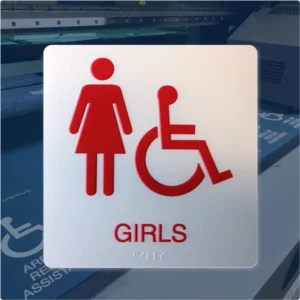
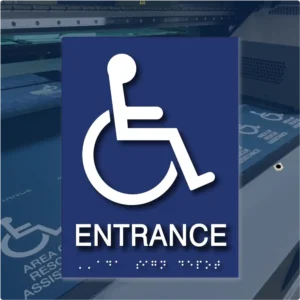
Visual requirements matter just as much as tactile ones. Characters must contrast with their background, either light on dark or dark on light, and both the characters and the background should carry a matte or eggshell finish. A non-glare finish is not just an aesthetic choice. Glare actively reduces readability for people with low vision, which is exactly why the standards discourage glossy surfaces. When a pictogram such as a wheelchair symbol appears, the ADA requires a 6-inch-high pictogram field, with the text and Braille placed below that field rather than inside it.
Mounting and placement trip up more projects than almost anything else. Tactile signage for permanent rooms must be mounted on the wall at the latch side of the door, with the baseline of the tactile characters between 48 and 60 inches above the finished floor. A person must be able to approach within 3 inches of the sign without running into the door swing or an obstruction. Getting these details right is not optional. Facilities that fail ADA signage requirements risk failed inspections, delayed certificates of occupancy, and legal exposure under federal accessibility law. HMWitt and Company supplies signs designed to eliminate that risk.
Get a Quote Today
Shop ADA Compliant Signs
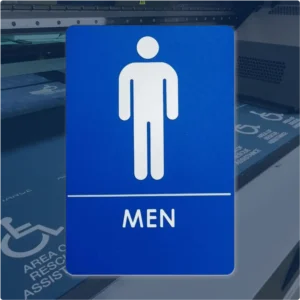
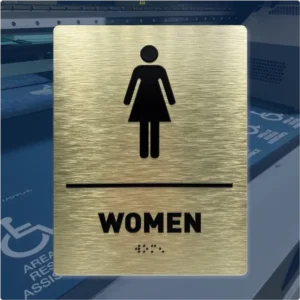
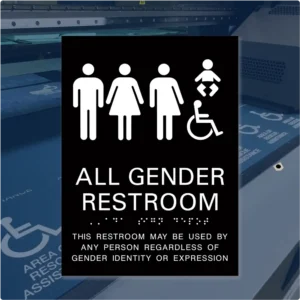
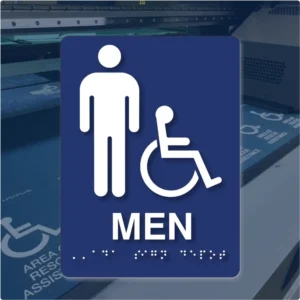


What Signs Are Covered by the ADA
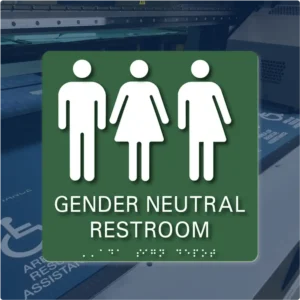
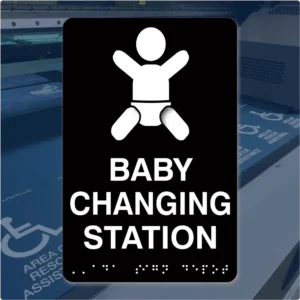
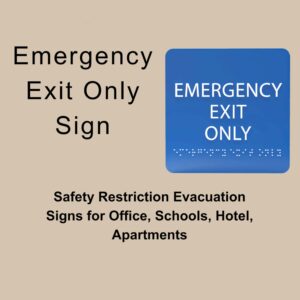
The strictest requirements apply to signs that identify permanent rooms and spaces. Restrooms, exit routes, stairwells, room numbers, and other spaces that do not change use are the most regulated category. Directional and informational signs carry lighter requirements, and truly temporary signs posted for fewer than 7 days, building directories, menus, and company logos are generally exempt. If you are specifying signage for a new construction project, a tenant improvement, or a multi-building rollout, the safest approach is to assume that any sign identifying a permanent room needs to meet the full tactile and visual requirements. The U.S. Access Board at access-board.gov and the official ADA standards at ada.gov are the authoritative references for your specific situation.
Frequently Asked Questions
Which signs in my building are required to be fully ADA compliant?
The strictest requirements apply to signs that identify permanent rooms and spaces. Restrooms, exits, stairwells, room numbers, and other spaces with a fixed use must have raised characters and Grade 2 Braille. Directional signs such as arrows or 'Reception this way' have lighter requirements, and temporary signs posted for fewer than 7 days, menus, directories, and logos are generally exempt.
What does Grade 2 Braille mean and why does it matter?
Grade 2, also called contracted Braille, uses a system of abbreviations and contractions to represent common words and letter combinations. The ADA specifically requires Grade 2 rather than the simpler Grade 1 format. The Braille dots must be rounded or domed, not flat, and must be placed below the corresponding raised text, not mixed into it.
Where exactly does a tactile sign need to be mounted?
Tactile signs for permanent rooms go on the wall at the latch side of the door, which is the side opposite the hinges. The baseline of the lowest tactile character must be at least 48 inches above the finished floor, and the baseline of the highest tactile character must be no more than 60 inches above the floor. Someone must be able to approach within 3 inches of the sign without being blocked by the door swing or any obstruction.
Do ADA signs need a special finish?
Yes. Both the sign background and the characters should have a matte or eggshell finish rather than a glossy one. A non-glare finish is preferred because glare reduces readability for people with low vision. High contrast between the character color and the background color is also required, either light characters on a dark background or dark characters on a light background.
Experience You Can Count On
HMWitt and Company has worked with property managers, general contractors, architects, facility managers, and small business owners on ADA signage projects ranging from single tenant suites to full building packages. We understand the code, the fabrication process, and the stakes involved when a sign has to be right the first time. If you are planning new construction, a renovation, or a multi-location rollout and want to work with a supplier who can guarantee code-correct tactile signage, call us at 773-250-5000.