
ADA Handicap Accessible Evacuation
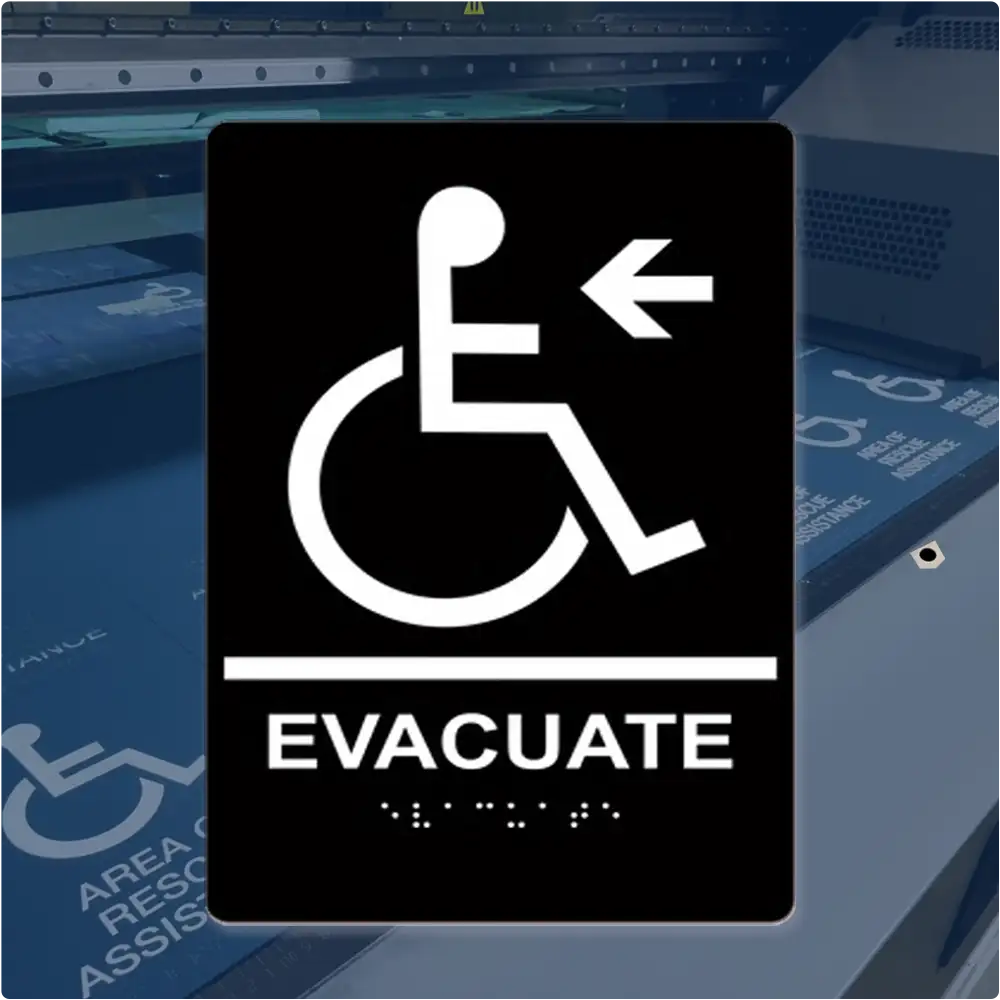
ADA compliant evacuation signs can literally save lives during an emergency, which makes them one of the most critical accessibility features in any building. These signs need to work for everyone, including people who are deaf, blind, or have mobility challenges.
That means using tactile elements, braille, high contrast colors, and illuminated or photoluminescent materials so they’re visible even when the power goes out. During a fire or other crisis, people with disabilities can’t afford to waste time trying to figure out where the exits are or which route is accessible to them. Standard evacuation signs might work fine for most people, but they leave out anyone who can’t see small print or distinguish colors in low light conditions. Making sure your evacuation signage meets ADA requirements means every person in your building has a fair chance of getting out safely when seconds matter most.
Building owners sometimes overlook evacuation signs when they’re focusing on accessibility upgrades, but that’s a dangerous mistake. Your responsibility doesn’t end at making sure people can get into your building and move around comfortably. You need to ensure they can get out quickly if something goes wrong. Compliant evacuation signs also need to clearly mark areas of refuge where people who can’t use stairs can wait for assistance during an emergency. Insurance companies and fire marshals take this stuff seriously, and you could face significant liability if someone gets hurt because your evacuation signage wasn’t adequate. The reality is that emergencies are chaotic and stressful for everyone, but proper signage reduces that confusion and gives people with disabilities the same information everyone else has access to.
It’s not an optional upgrade or something you can put off until later. It’s a fundamental safety requirement that protects your customers, employees, and your business itself.
ADA compliant evacuation signs can literally save lives during an emergency, which makes them one of the most critical accessibility features in any building. These signs need to work for everyone, including people who are deaf, blind, or have mobility challenges.
That means using tactile elements, braille, high contrast colors, and illuminated or photoluminescent materials so they’re visible even when the power goes out. During a fire or other crisis, people with disabilities can’t afford to waste time trying to figure out where the exits are or which route is accessible to them. Standard evacuation signs might work fine for most people, but they leave out anyone who can’t see small print or distinguish colors in low light conditions. Making sure your evacuation signage meets ADA requirements means every person in your building has a fair chance of getting out safely when seconds matter most.
Building owners sometimes overlook evacuation signs when they’re focusing on accessibility upgrades, but that’s a dangerous mistake. Your responsibility doesn’t end at making sure people can get into your building and move around comfortably. You need to ensure they can get out quickly if something goes wrong. Compliant evacuation signs also need to clearly mark areas of refuge where people who can’t use stairs can wait for assistance during an emergency. Insurance companies and fire marshals take this stuff seriously, and you could face significant liability if someone gets hurt because your evacuation signage wasn’t adequate. The reality is that emergencies are chaotic and stressful for everyone, but proper signage reduces that confusion and gives people with disabilities the same information everyone else has access to.
It’s not an optional upgrade or something you can put off until later. It’s a fundamental safety requirement that protects your customers, employees, and your business itself.
Reviews
There are no reviews yet.